
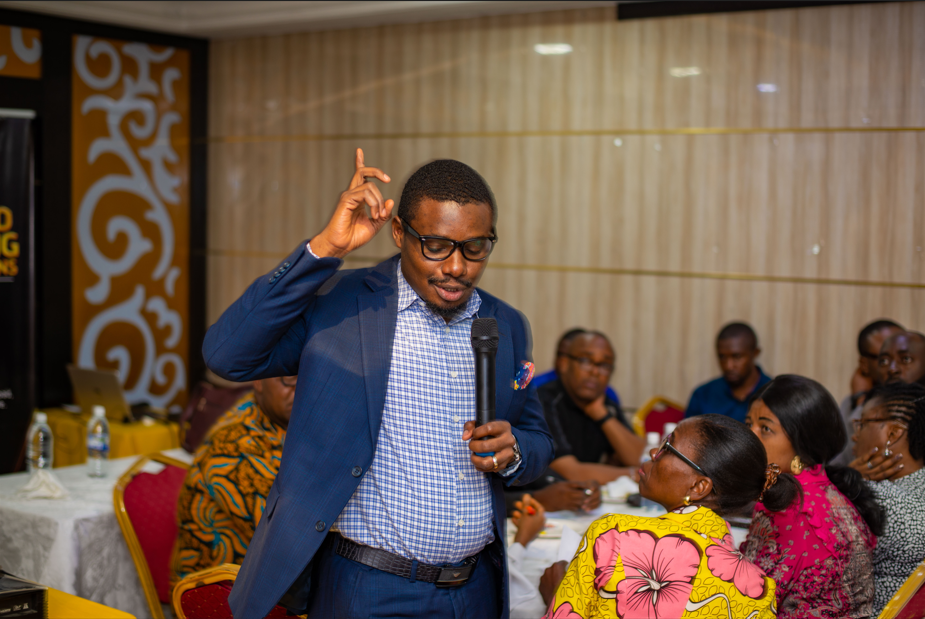
Sales Training in Nigeria: Why Every Employee Needs It, Not Just Your Sales Team
Sales training in Nigeria is most effective when it covers the entire workforce — not just the sales department. Organisations that train only their sales team while leaving the rest of the organisation commercially untrained consistently underperform those that build revenue awareness across every function.
This is not a popular position. Most Nigerian businesses still view sales as a department, not a culture. But the evidence from organisations that have made the shift is hard to argue with.
What most Nigerian businesses get wrong about sales training
The conventional approach is straightforward: identify your sales team, send them for training, measure improvement in numbers. It is logical, simple, and misses the majority of the revenue opportunity.
The reason is simple. In most Nigerian businesses, the sales team is responsible for initiating commercial relationships — but they are not the only people responsible for maintaining and growing them. Every interaction a client or prospect has with your organisation either builds or erodes commercial trust. And most of those interactions happen outside the sales function entirely.
The receptionist who answers the phone. The customer service officer who handles a complaint. The operations manager who communicates delivery timelines. The finance officer who manages the client’s account. The department head who sits in a meeting with a potential client’s leadership team. Each of these moments is a commercial moment — and in most Nigerian organisations, the people in those moments have never received a single hour of training on how to handle them commercially.
The case for whole-organisation sales training
Consider two Nigerian businesses in the same sector, with equally strong sales teams.
Business A trains only its sales staff. The rest of the organisation operates with varying degrees of professionalism, service quality, and commercial awareness. Clients who were well-sold often encounter a post-sale experience that does not match the promise made during the pitch. Referrals are rare. Renewals are uncertain.
Business B trains its entire workforce in commercial awareness, customer communication, and their role in revenue generation. The sales team closes deals. The operations team delivers in a way that builds client confidence. Customer service handles issues in a way that retains rather than just resolves. Management creates an environment where staff are motivated and client-focused at every level.
Over twelve months, which business grows faster? Which has higher client retention? Which generates more referrals without spending on marketing?
The answer is consistent across industries and organisation sizes. Commercial culture, built through whole-organisation training, compounds. It does not just improve sales — it reduces the cost of sales by making retention and referral the norm rather than the exception.
What sales training should cover for non-sales staff
The goal is not to turn every employee into a sales executive. It is to give every employee the awareness and skills to play their commercial role well. For non-sales staff, that typically includes:
Understanding the commercial value of their role. A customer service officer who understands that retaining a client is worth three to five times the cost of acquiring a new one approaches a complaint conversation very differently from one who sees their job as simply closing tickets.
Communication skills that build rather than erode relationships. How to greet a client or prospect. How to respond to an enquiry with warmth and professionalism. How to communicate delays, problems, or bad news without damaging the relationship. How to end an interaction in a way that leaves the client feeling valued.
Recognising and responding to revenue opportunities. Staff who are not in sales often encounter referral opportunities, upsell moments, or information about a client’s expanding needs — and have no framework for what to do with them. Training gives them that framework.
Representing the brand in every interaction. Every employee is a brand ambassador. Training that connects individual behaviour to the organisation’s reputation and commercial success creates staff who think and act accordingly.
What sales training should cover for the sales team specifically
While the whole organisation needs commercial awareness, the sales team needs deeper and more specific development. In Nigeria’s current business environment, the areas that consistently need attention are:
Consultative selling over transactional selling. Nigerian buyers — especially at the corporate level — are more sophisticated than they were a decade ago. They do not respond well to high-pressure tactics or generic pitches. The sales professionals who are winning consistently are those who ask better questions, listen more carefully, and position their offering as a solution to a specific, identified problem.
Relationship management and follow-up discipline. Most Nigerian sales are lost not because of price or product — they are lost because of inconsistent follow-up. Training that builds structured relationship management habits directly addresses one of the largest revenue leaks in Nigerian sales teams.
Handling objections in Nigeria’s economic environment. Budget constraints, approval processes, multiple decision-makers, and economic uncertainty are realities every Nigerian sales professional encounters. Training that equips them to navigate these realities honestly and confidently produces better outcomes than training that ignores them.
Converting referrals and warm leads. Referral business in Nigeria is enormous — and largely undertapped. Sales teams that are trained to actively cultivate and convert referrals consistently outperform those that treat referrals as a passive bonus.
How to structure sales training across your organisation
For Nigerian businesses looking to build genuine commercial culture through training, a phased approach works best:
Start with senior leadership and management. If the MD and department heads do not model commercial thinking, no amount of frontline training will stick. Leadership training that connects organisational culture to revenue outcomes sets the foundation.
Then train frontline and customer-facing staff. This is where the most immediate commercial impact is felt — the receptionist, the customer service team, the account managers, the delivery staff. Their training should be practical, scenario-based, and directly connected to the client experiences they encounter daily.
Then address the sales team with deeper, more specific commercial skills development. At this point, the environment the sales team is operating in has improved — leadership supports commercial culture, and the wider organisation is no longer undoing their work.
Then reinforce through regular follow-up and accountability. Training is a starting point, not a solution. Post-training coaching, departmental assessments, and performance tracking are what convert a training intervention into lasting commercial improvement.
If your business is experiencing stalled revenue, read our article on why the problem is usually not just your sales team.
Mapemond’s approach to sales training in Nigeria
At Mapemond Limited, sales training is not a standalone programme for the sales department. It is part of a whole-organisation approach to commercial performance that we have refined across 18 years of training Nigerian businesses.
Our training programmes address every level of the organisation — from the Basic Package that equips frontline staff with revenue-generating mindsets, to the Professional Package that builds advanced sales and business development skills, to the Executive Package that develops the leadership capability that makes commercial culture sustainable.
Every session is in-person, tailored to your industry and organisation, and delivered at your location across Nigeria — Lagos, Port Harcourt, Abuja, and beyond. One flat fee covers your entire team, regardless of size.
Over 100,000 Nigerian personnel trained. 80+ organisations. 18+ years. If your business is ready to build a team where everyone sells — not because it is in their job description, but because they understand and are invested in the company’s success — we would like to talk.
Request a consultation here or reach us on WhatsApp.
Frequently Asked Questions
What does sales training for non-sales staff include in Nigeria? For non-sales staff, commercial training typically covers: understanding how their role contributes to revenue, client communication and relationship skills, how to recognise and respond to referral or upsell opportunities, and how to represent the organisation’s brand in every interaction. The goal is commercial awareness and behaviour, not sales technique.
How much does sales training cost in Nigeria? Sales training in Nigeria ranges from NGN 500,000 to NGN 3,000,000 and above depending on the programme depth, number of participants, and provider. Mapemond’s flat-fee model means one price covers your entire team regardless of size, starting at NGN 500,000 for a foundational one-day session.
Can sales training be done for large teams in Nigeria? Yes. Mapemond’s training packages are flat-fee and cover any class size. Whether your team is 10 or 200 people, the price does not change. This makes budgeting straightforward and removes the barrier of per-head cost escalation.
How is Mapemond’s sales training different from other providers in Nigeria? Mapemond trains the whole organisation, not just the sales team. Our approach is built on the principle that every employee either contributes to or erodes revenue — and that commercial culture is built through whole-organisation training, not just sales department programmes. Sessions are tailored to your industry and delivered in-person at your location.
Is sales training available in Port Harcourt, Lagos, and Abuja? Yes. Mapemond delivers sales and commercial training across Nigeria, including Port Harcourt, Lagos, Abuja, and other cities. Our facilitators come to you — you provide the venue, we handle the rest.