
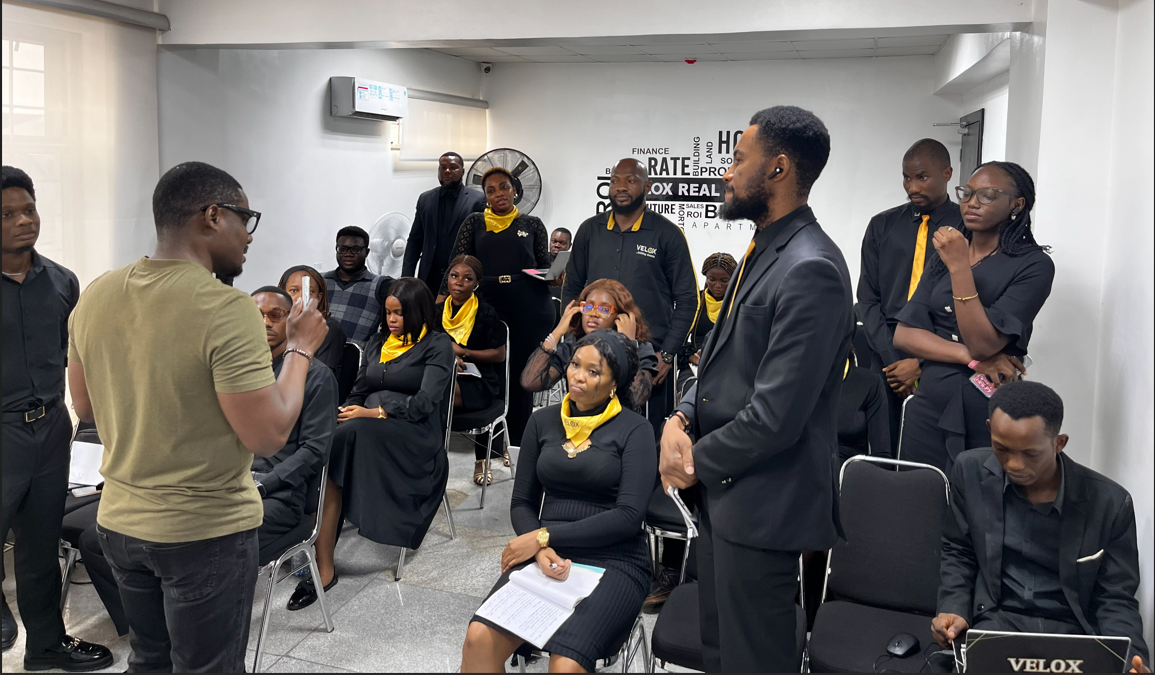
Why Your Nigerian Employees Are Busy But Not Productive (And What to Do About It)
If your team is always busy but your business is not moving forward at the pace it should, the problem is almost certainly not effort — it is the absence of direction, ownership, and the right work mindset.
This is one of the most common frustrations among Nigerian business owners and HR managers. Staff come in early, stay late, fill up their days with activity — and yet targets are missed, responsibilities slip, and the same problems keep recurring. It feels like a motivation problem. It rarely is.
The difference between activity and productivity
Activity is movement. Productivity is movement toward a result.
A customer service officer who responds to every complaint but never resolves them is active. A sales executive who makes calls all day but never follows up is active. A manager who attends every meeting but never makes decisions is active. None of them are productive in the way your business needs.
The gap between activity and productivity is not fixed by pushing people harder. It is fixed by giving them clarity on what results they are responsible for, the skills to achieve those results, and a mindset that connects their daily work to the organisation’s larger goals.
Most Nigerian businesses invest heavily in getting the work done but invest very little in equipping their people to do the work well. That gap compounds over time.
Why ownership mentality is the root issue
Walk into most Nigerian organisations and you will observe a quiet but costly pattern: staff treat problems as belonging to the boss. A client complains — they log it and wait. A process breaks down — they note it and move on. An opportunity appears — they assume someone else will handle it.
This is not laziness. It is what happens when employees have never been trained to think like stakeholders. They do their job description and nothing beyond it, because no one has ever shown them how their contribution connects to the business’s survival and growth.
Ownership mentality is the belief that the success or failure of the business is partly your responsibility — regardless of your title. Employees who carry it spot problems before they escalate, go beyond their brief when it matters, and hold themselves accountable for outcomes, not just tasks.
It does not develop automatically. It is built through deliberate training, consistent leadership, and a workplace culture that rewards initiative.
The structural causes most organisations miss
Beyond mindset, there are structural reasons Nigerian teams underperform that training alone cannot fully address — but that training can begin to correct:
Vague role definitions. When employees are not clear on exactly what they are responsible for delivering, they default to generic effort. Clarity on deliverables is the foundation of accountability.
No performance language. Many Nigerian businesses do not regularly discuss results with their teams. Without a shared language around targets, performance reviews, and expectations, staff have no reference point for what “doing well” actually looks like.
Underdeveloped middle management. Team leaders and supervisors are often the weakest link in Nigerian organisations — promoted for tenure or loyalty rather than leadership ability, and rarely given the training to manage people effectively. Poor middle management multiplies underperformance across entire departments.
Weak feedback culture. Nigerian workplace norms often make honest feedback difficult. Managers avoid difficult conversations; staff assume silence means approval. Problems compound quietly until they become crises.
What structured training actually changes
When a Nigerian organisation runs a well-designed corporate training intervention, the changes that tend to stick are not the motivational ones — they are the practical ones.
Employees leave with a clearer understanding of what excellent performance looks like in their specific role. They have frameworks for prioritising work and managing their time toward results rather than just filling hours. They understand how their team’s function connects to revenue and client satisfaction. And critically, they have been given permission — through the training itself — to think beyond their job description.
For managers, the shift is even more significant. Training that addresses leadership, delegation, and team accountability equips supervisors to hold their teams to a higher standard without micromanaging — which in turn frees up the business owner or MD to focus on growth rather than operations.
What to look for in a corporate training solution
Not all training delivers the same result. The following factors separate interventions that create lasting change from those that are forgotten within a week:
Relevance to your industry. Generic training on productivity principles will not resonate the same way as content that speaks directly to the realities of working in Nigeria’s oil and gas sector, retail environment, or hospitality industry. Facilitators should understand your context.
Customisation to your organisation’s specific problems. A business struggling with poor customer service needs a different intervention from one battling low sales performance or weak internal communication. Good training begins with a diagnosis.
A measurable outcome orientation. Training without targets is attendance. The best corporate training programmes connect session objectives to business metrics — sales conversion rates, customer retention, staff attrition, response times.
Post-training reinforcement. Learning fades without reinforcement. Organisations that see the most improvement combine training sessions with follow-up coaching, departmental assessments, or structured accountability systems.
For Nigerian businesses ready to act
If your team is busy but not producing the results your business needs, the answer is not a performance improvement plan or a warning letter. It is an investment in equipping your people with the mindset, skills, and systems that actually produce results.
At Mapemond Limited, we have trained over 100,000 personnel across 80+ Nigerian organisations — including Arik Air, NNPC, Indorama, LG Nigeria, and Hotel Presidential. Our corporate training packages are tailored to your company’s stage, industry, and goals. Every session is delivered in-person, facilitated by sector experts, and priced at a flat fee regardless of team size.
If you are ready to move your team from busy to genuinely productive, request a consultation here or speak with us directly on WhatsApp.
Frequently Asked Questions
What is the difference between staff training and corporate training in Nigeria? Staff training typically refers to role-specific or skills-based learning — how to use a system, how to follow a process. Corporate training is broader: it addresses mindset, workplace culture, leadership, team performance, and organisational effectiveness. Both are valuable, but corporate training produces organisation-wide change.
How do I know if my team needs corporate training? Common indicators include: targets are consistently missed despite apparent effort, managers are overwhelmed and cannot delegate effectively, customer complaints are recurring, and staff turnover is higher than it should be. If your business cannot run without you, that is also a strong signal.
How much does corporate training cost in Nigeria? Corporate training in Nigeria typically ranges from NGN 500,000 to NGN 5,000,000 and above, depending on programme depth, duration, and provider. Mapemond’s packages are flat-fee — one price covers your entire team regardless of size — starting at NGN 500,000 for a one-day staff foundations session.
Can corporate training be done in Port Harcourt, Lagos, and Abuja? Yes. Mapemond delivers corporate training across Nigeria including Port Harcourt, Lagos, Abuja, and other cities. Our facilitators come to your location — you provide the venue and we handle the rest.
How long does a corporate training session last? Our sessions range from one-day intensive programmes to multi-day executive education and extended training academies, depending on the package selected.